Torres vows to show 'what it takes to deliver'; Moylan says Guam needs continuity of representation

Updated: Apr 24
By Mar-Vic Cagurangan
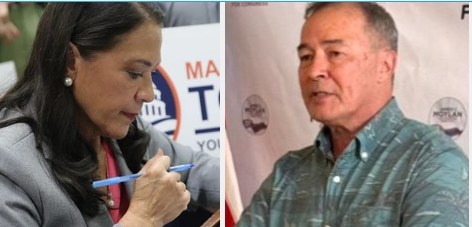
Former senator Mary Camacho Torres has officially entered Guam’s congressional race, challenging incumbent Del. James Moylan for the Republican nomination and setting in motion the battle for the territory’s non-voting seat in the U.S. House of Representatives.
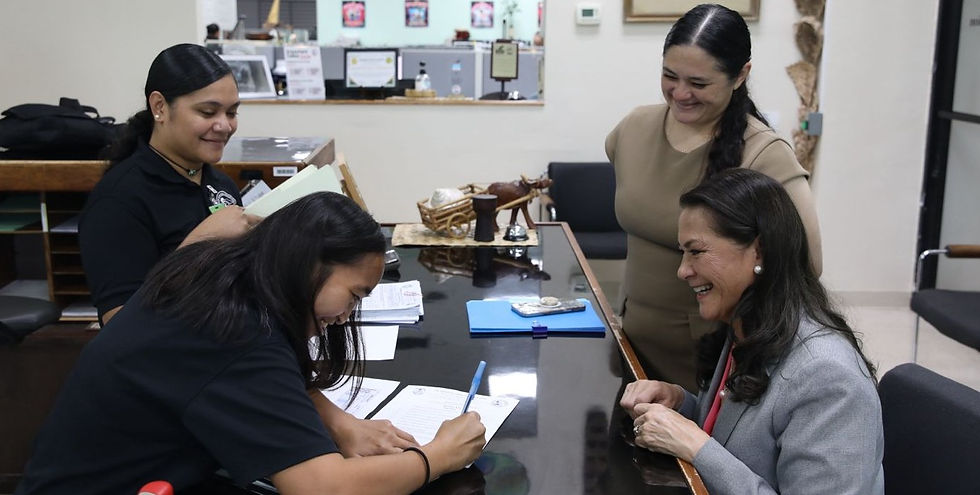
Torres filed her candidacy with the Guam Election Commission on Wednesday, pledging to lower the cost of living, advocate for equitable treatment and strengthen the island's representation in Washington.
Moylan filed his candidacy on March 10, launching his bid for a third term, arguing that “continued progress for Guam depends on strengthening the relationships and partnerships built in Congress.”
The Republican candidate who wins the Aug. 1 primary will advance to the Nov. 3 general election to face the Democratic nominee in the hotly contested race.
Former attorney general Alicia Limtiaco is so far the only emerging Democratic candidate seeking the congressional seat.
The deadline for filing candidacy is May 1.
Guam’s exclusion from certain federal programs, such as the Supplemental Security Income and the Radiation Exposure Compensation Act, as well as broader access to benefits and services for regional veterans, are some of the unresolved issues that gauge the effectiveness of a delegate’s representation in the halls of Congress.
“These are not new problems. Guam had a real chance to move these issues forward last year, but our delegate didn’t deliver. And when that happens, it’s our people who pay the price," Torres said.
“I’m not running to offer easy answers. I’m running to do the work and to be clear with people about what it takes to deliver,” she added.
In an earlier press statement, Moylan itemized federal dollars that he said he successfully pushed for Guam throughout his term in Congress, including a $1.2 billion authorization to strengthen the island's strategic role in the Indo-Pacific region and a $50 million appropriation for defense access roads.
Torres, however, said federal investment in Guam has been lopsided, mostly directed toward military installations.
“If the investment is happening here, our people should see the benefit through real opportunities for our businesses and our workforce," she said.
Moylan and Torres both hail from a political powerhouse.
Moylan is the nephew of former lieutenant governor Kurt Moylan. Kaleo Moylan, also a former lieutenant governor, is James Moylna's nephew. Before his election to Congress, James Moylan served in the Guam legislature.
Torres is the daughter of former Gov. Carlos Camacho and the sister of former Gov. Felix Camacho. She is married to Supreme Court Justice Robert Torres. A four-term senator, Torres is the former head of the Port Authority of Guam, the Guam International Airport Authority and the Guam Visitors Bureau.
She said her public service background at the local government would guide her work at the federal level.
“This work starts well before a vote is ever taken,” she said. “It takes building bipartisan support, securing partners who can carry it through Congress and doing the work to turn an idea into law—and that’s what I will do.”

Torres underscored the need to ensure that federal spending on Guam benefits the broader community, not just projects within military installations.
“Guam families are working harder than ever, yet the cost of living continues to rise faster than wages. Young families are doubling up, seniors are struggling, and many of our best and brightest are leaving the island because they cannot build a future here,” Torres said. “Our families deserve better—and they deserve honesty about what it takes to get things done," she added.
Moylan, for his part, said Guam needs consistent representation to hold its political foundation.
“Those relationships take time. They take effort. And they take consistency,” he said. “They are built through trust, through partnership, and through years of standing up for the people we represent.”
Delegates from the U.S. territories can introduce bills, including appropriations requests and resolutions, in the House. However, they do not have a vote on the floor and cannot vote in recorded votes on final passage of any bill or resolution.

Subscribe to
our digital
monthly issue