


COP 31: Where have all the Ocean states gone?

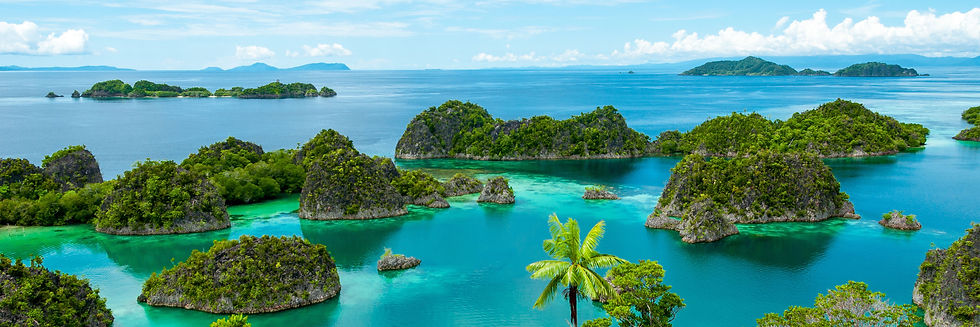

Once, with the sinking sun behind Tonoas shimmering off the waters of Truk Lagoon in that short, spectacular burst of light, I had a conversation as to whether the scattered islands of Micronesia have much in common.
While Palau and Chuuk share more in common than they do with, say, San Francisco, it remains an open question whether they belong in the same category beyond the issue of outmigration.
I recalled this chat when I read a directive this week: Journalists should not use the term “Global South.”
Or so went the discussion, or at least what passed for a discussion; it was on LinkedIn in all its safe-committee-thought glory, after all. This was from the editor of the Global Press Journal, the Journal’s Global Press Style Guide, their standardized approach to describing certain things and documenting information to combat what feels like a losing battle against made-up information.
Global Press Journal’s guide does not define “Global South,” but does admonish its writers to “not use the terms 'developing nation,' 'developing world,' 'economically developing,' 'emerging economy,' 'Global South' or 'Third World' to describe any country or region. Instead, include economic data relevant to a story’s news value.”
The reason? These terms are geographically imprecise, lack widely accepted definitions and are used to sanitize poverty across countries that have little else in common, reflecting bias and defining complex communities by foreign standards of wealth.
You can probably guess this publication’s leanings from this passage, but it’s hard to argue in favor of imprecision and overgeneralization.
And I happen to agree with their stance on “Global South” precisely because it’s a meaningless, throwaway expression, or what a conservative might call a "virtue signal." South of what? Is Australia south?
At the same time, I happened to see a trans-Pacific newswire summary amid COP30, this year’s annual climate change get-together.
Befitting the current political climate, this year’s COP had a remarkably different tone from recent years. No headlines about bombing Palau or standing in knee-deep water over what used to be dry land. No profiles of climate youth negotiators or wealthy university students who skipped school and jetted across the globe to hold a sign and shout. I’m sure they were there. They just weren’t prominent.
I have to confess: I thought the conference was already over. I realized after the fact that they were still pushing to the endpoint—an agreement that changes nothing.
What was prominent at this year’s Climate Change Olympics was Australia and Turkey locked in a tense standoff over which nation gets to host next year’s conference of self-promotion, I mean, delicate diplomatic efforts to avert global catastrophe, when the world can’t even agree there’s a problem to begin with.
Meanwhile, China’s clean energy output has surpassed some nations’ entire energy use.
Under the stop-leaving-oceans-on-the-periphery banner, Pacific island nations presented a united front in favor of Australia hosting next year, arguing that, given its geography, Australia could highlight the oceans in climate change discussions.
An article in Island Business by Sera Tikotikovatu–Sefeti titled "In Time for a Pacific COP, Ardern Challenges the World," attributed the Five-Point Ocean Agenda for COP to Mosese Bulitavu, Fiji’s minister for environment and climate change.
Those points include a new collective quantified goal on climate finance, a shift toward decisive grant-based and highly concessional finance, restoring recognition of the special circumstances of small island developing states, scaling finance according to urgency and strengthening their representation in the governance of multilateral funds.
I’d like to add one additional point: tie climate finance to financial transparency.
As Transparency International puts it, “major industries, especially the biggest emitters, have long obstructed the development of ambitious climate policy at both national and international levels. It is therefore crucial not to assume that all companies attending COP do so in good faith."
It’s foolhardy to believe that all non-landlocked nations share a common bond, but oceans certainly stand at the forefront of virtually every diplomatic concern, from transportation to economic development, national security to rising sea levels. I’m just not sure how far inland that unity can travel.
In the end, Australia bowed out. Turns out next year is Europe’s turn to host, or at least a nation that’s Europe-adjacent. Where climate is concerned, Australia and Turkey are both European, so they’ll co-host.
I have no interest in who hosts the actual Olympics, aside from perhaps not letting dictators do it. Until it brings back tug-of-war, I’ll remain a conscientious objector to international sport.
For now, I’m sure no one will lump Australia into the same category as Turkey. But I’ll maintain my skepticism that COP31 will be the vehicle for any real change on the climate crisis.
Gabriel McCoard is an attorney who previously worked in Palau and Chuuk State. Send feedback to gabrieljmccoard@hotmail.com.

Subscribe to
our monthly
digital edition


