Behind every typhoon name is a country and a culture


By Bryan Manabat
When a tropical storm forms somewhere in the vast stretch of ocean between Guam, Japan, and Vietnam, the first question island residents often ask is simple: What’s its name?
For decades, those names—Pamela, Omar, Karen—felt familiar, almost local.
But around the year 2000, the naming system changed and the western North Pacific entered a new era of typhoon identity.
“It’s one of the most frequently asked questions we get,” said Marcus Landon Aydlett, warning coordination meteorologist at the National Weather Service Guam. “People want to know where these names come from and why they sound so different from the ones they grew up with.”
For years, the Joint Typhoon Warning Center, then based in Guam, assigned names in alphabetical order, much like the Atlantic hurricane list. But when JTWC relocated to Pearl Harbor, Hawaii, naming authority shifted to a United Nations body: the ESCAP-WMO Typhoon Committee, a 14‑member group representing nations across the Asia-Pacific.
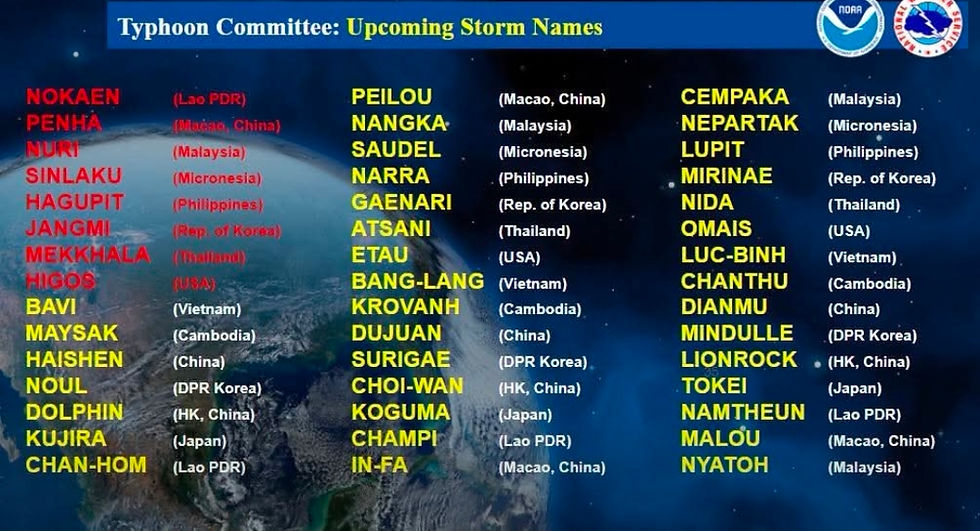
“The Typhoon Committee is made up of 14 member nations, and the United States is one of them,” Aydlett said. “Each country submits names, and those names make up a rotating list used for storms in the western North Pacific.”
Aydlett serves as part of the U.S. delegation to the committee, currently as vice chair of the Working Group on Disaster Risk Reduction, one of five technical groups that guide regional policy. It’s a role that places Guam—often in the direct path of these storms—squarely in the conversation about how they’re named.
The naming list contains five columns, each with contributions from all 14 countries, arranged alphabetically by nation. Cambodia, China, Japan, Micronesia, the Philippines, the United States, Vietnam and others appear twice in each column. The list cycles continuously, meaning names return every few years unless retired.
“These names are retired when a country affected by a significant storm requests it,” Aydlett said. “If a typhoon causes major casualties or destruction, the country that contributed the name can ask for it to be removed.”
When a name is retired, the contributing nation submits three replacements, which are then reviewed and approved by the committee. It’s a process that blends meteorology with culture, language and national identity.
Some names are instantly recognizable to island residents—Bolaven, Sanba, Jelawat Maliksi—while others reflect places or natural features from faraway countries.
ADVERTISEMENT

The current list includes Bavi, a name contributed by Vietnam.
“Bavi is a district in a stunning mountain range about 48 kilometers west of Hanoi,” Aydlett explained. “Internationally, the name appears as an official name for Western Pacific tropical cyclones contributed by Vietnam.”
Naming authority rests with the Japan Meteorological Agency’s Tokyo Typhoon Center, the region’s specialized forecasting hub. Once JMA determines a tropical depression has reached tropical storm intensity, it assigns the name.
“Sometimes JTWC will call something a tropical storm before JMA does,” Aydlett said. “That’s why you might see a storm with a number but no name. It’s just one of those technicalities.”
For Aydlett, certain names carry personal weight. His early years in Guam were filled with stories of Pamela, Karen, Omar, Pongsona and Chata’an—storms that defined earlier generations.
In his own 16-year career, several typhoons stand out: Dolphin in 2015, Mangkhut and Yutu in 2018, Soudelor, Mawar, and most recently Sinlaku.
“Mangkhut was my first typhoon where I had to step into the role I’m in now,” he said. “It was incredibly nerve-wracking—lots of nerves and anxiety—but also one of the most rewarding experiences serving the community.”
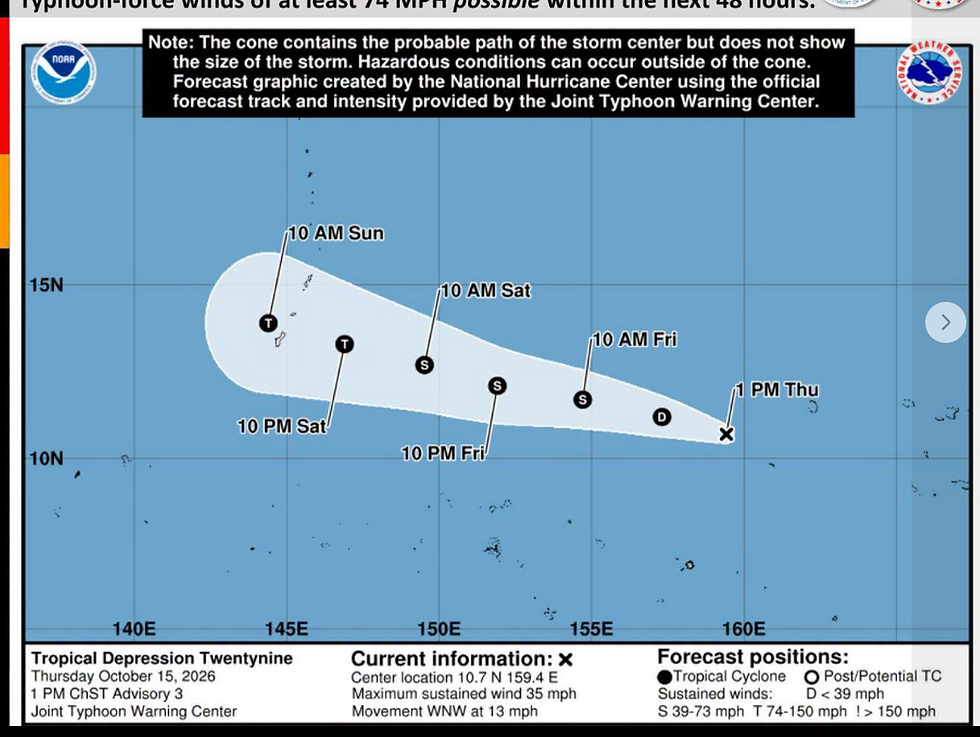
As for Bavi, the name has returned to the list after appearing in 2015. This time, the storm is stronger, more dangerous, and poised to leave its own mark on the region.
“Oh my gosh, this is potentially a monster,” Aydlett said. “This is going to go down in the record books for islands.”
Behind every typhoon name is a story—of geography, culture, and international cooperation. But for island communities, the meaning becomes personal only when the storm arrives.
And as Aydlett reminds residents, the name is just the beginning.

Subscribe to
our digital
monthly issue