Trump’s plan to resume nuclear testing hits a sensitive nerve in the Pacific


By Ron Rocky Coloma
When Vehia Wheeler first heard whispers that the United States might resume nuclear testing, she did not believe it. The news had not yet reached the media, but the idea alone felt surreal.
“Nuclear testing has come to an end for decades now. What is the point of starting again now?” she said. “It still seems unreal.”
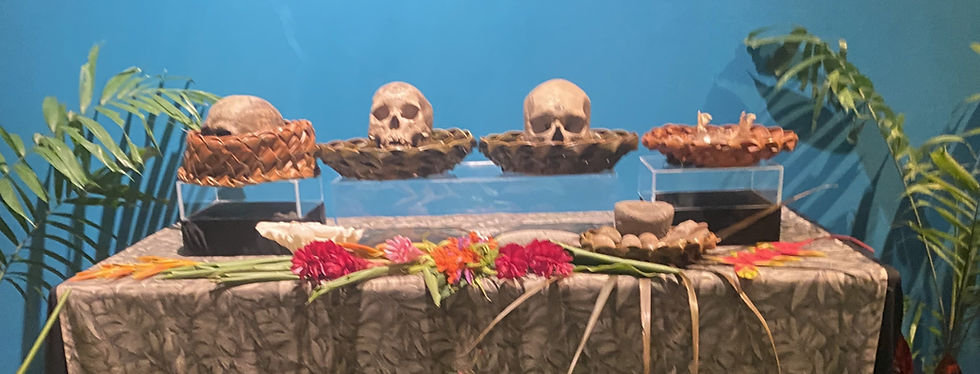
For Wheeler, who works with the NGO Moruroa E Tatou in Mā’ohi Nui, the prospect is not an abstract geopolitical exercise. It carries the weight of history, memory and a deep sense of vulnerability familiar across the Pacific, where more than 315 nuclear weapons were detonated by the United States, United Kingdom and France during the Cold War. Those blasts reshaped entire landscapes and communities. They also left an enduring distrust toward nuclear powers that still refuses to fade.
Reports that the Trump administration has directed preparations for a possible test, which would break the global moratorium in place since 1992, have sparked strong regional reaction. Pacific civil society organizations say renewed testing would disregard the region’s long-standing calls to end nuclear harm and could fuel a wider arms race. They argue that, for Pacific communities, these discussions are direct and personal, not distant policy debates.
Wheeler said the narrative of the Pacific has long been distorted by outside perceptions. Where visitors may see paradise, residents see home.
“Paradise is a social construct,” she said. “To be portrayed as either one creates a caricature, or an image, that doesn’t see us as equal human beings in this world.”
When outsiders romanticize the islands, she added, they often ignore the political history that allowed nuclear testing to happen in the first place.
“Maybe if people saw us as human, as equals, as their mothers, daughters, sisters, etc., they wouldn’t then expect us to be a laboratory for their nuclear arms race.”

That history is never far from daily life. In Mā’ohi Nui, the French government carried out 193 tests at Moruroa and Fangataufa. Wheeler said the legacy remains in the soil, the food chain and in generational health problems.
“We live with the aftermath of these tests,” she said. “They avoid taking responsibility. That is the true picture of what this legacy means. We live with health and environmental impacts, and we also live with lies and in darkness about the truth.”
Pacific civil society groups are now using terms like “existential threat” to describe the renewed signals from nuclear-armed states. They warn that any new testing would deepen harm already concentrated in small, vulnerable communities. They are also calling on the United States to show a stronger commitment to regional peace by ratifying the South Pacific Nuclear Free Zone Treaty and joining the Treaty on the Prohibition of Nuclear Weapons, steps Pacific island countries have already taken.
Read a related
The region’s alarm is not limited to U.S. actions. Japan’s ongoing release of treated Fukushima wastewater has stirred familiar anger. Wheeler said the move feels like another layer placed on an already strained environment.
“Their actions are like icing on the cake,” she said. “We already live in a polluted environment, and then they propose to pollute it more.” She added that Pacific leaders have not acted with the urgency the moment demands. “Their commitments and discourse fall short of real action.”
Civil society groups say this recurring pattern, where outside powers make decisions that affect Pacific communities, fuels broader calls for accountability. They want nuclear-armed states to acknowledge past harm, fund independent environmental studies, support cancer treatment facilities and assist with environmental remediation.
Youth voices across the region have added pressure. The Marshall Islands Students Association said in a recent statement that renewed testing would be “an overall unnecessary violence” and a threat to communities still grappling with the effects of past tests. They said the decision highlights how nuclear deterrence continues to fail as a global security strategy.

Wheeler has seen younger Pacific advocates shape these conversations in new ways. While she does not speak for the youth, she said they are bringing energy, digital skills and broader reach.
“They are in charge of the social media communications, and they create informative and simple-to-understand content,” she said. “It is more accessible and simplified, so a broader population can understand.”
Even as regional leaders debate visions such as an “Ocean of Peace,” Wheeler believes that political rhetoric often conflicts with the region's ongoing militarization. She sees the declaration, introduced by Fiji’s Prime Minister Sitiveni Rabuka and signed at the Pacific Islands Forum in September, as symbolic but insufficient.
“It claims Ocean of Peace meanwhile maintains military forces against an ever-growing tense geopolitical landscape,” she said. “It’s hypocritical and not working towards anything substantive.”
For communities living with nuclear consequences, storytelling remains a crucial tool. Wheeler said oral history, memory and ancestral knowledge help reclaim narratives long shaped by outside governments.
“These are ways that we can feel empowered to tell our stories in our own fashion,” she said. “Storytelling is an important part of the process.”
Despite the fear and frustration, Wheeler holds onto a practical form of hope. She doubts that nuclear testing will resume.
“There will be too much international pressure to block (Trump) from starting again,” she said. But the worry itself is exhausting. The possibility reopens wounds that never fully healed.
She said she often finds herself explaining the danger to policymakers who still view nuclear technology through a narrow security lens. During a recent conversation with a Pacific regional official advocating nuclear energy, she said she felt a deeper disappointment.

“People need to be better educated about the issues and the impacts, and have values that privilege people over everything else.”
Across the Pacific, civil society groups continue to call for action. They want the United States, France and the United Kingdom to take responsibility for their testing programs and provide meaningful support for communities facing long-term health and environmental impacts. They also want Japan to stop releasing wastewater and review its disposal plans.
The stakes remain clear in places like the Marshall Islands, French Polynesia and Kiribati, where the scars of past detonations are still visible in medical records, contaminated sites and intergenerational trauma. For many families, the nuclear era is not history. It is an inheritance.
When Wheeler learned of possible new tests, the disbelief she felt was tied to this long and painful timeline. The Pacific has carried the weight of nuclear decisions made far from its shores.
The idea of returning to that era still feels impossible to her. Yet the fear shows how deeply the past remains present. As Wheeler put it, “We live with the aftermath.”

Subscribe to
our monthly
digital edition