Guam, CNMI better informed and more prepared for typhoons, thanks to real-time information feeds

Updated: Jul 6

By Mar-Vic Cagurangan
Residents of Guam and the Northern Mariana Islands tune in to the National Weather Service’s live-streamed daily briefings on Facebook for the latest updates on Super Typhoon Bavi’s track, speed and location.
The Joint Information Centers for Guam and the CNMI have also been continuously disseminating pertinent information: utility outages, available resources, where to go, what to do.
In the age of social media, information at one's fingertips enables island residents to better understand a typhoon’s behavior, manage their stress and adequately prepare for its potential impact.
“I think we are in a good place as far as preparedness, awareness and the communications from both the governors of Guam and the CNMI, the local media partners; the awareness has been out there for upwards of a week now," Gov. Lou Leon Guerrero said.

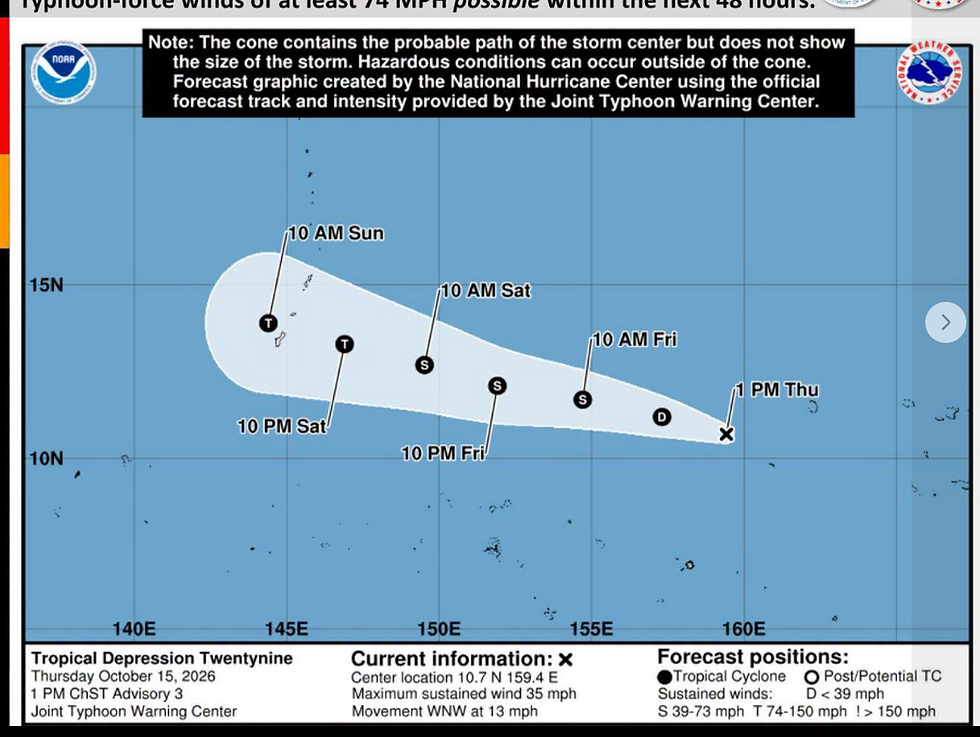
The Aydlett brothers, Landon and Brandon, have become familiar faces and household names. Leveraging technology to reach their audience, the NWS' twin meteorologists explain weather events in accessible language, interpreting weather graphic and translating jargon into words regular people can understand: "Bavi is a monster typhoon; it poses a grim threat. Prepare now."
“So people are taking it seriously. The roads are clear,” the governor said. "And all of us working together in one unified direction really makes things a lot better in the protection of our people."
Learning from the lessons of Mawar, Guam and CNMI residents promptly acted when the NWS raised a red flag for Bavi. They shuttered their houses, stocked up on emergency supplies, hit the gas stations and ATM for emergency cash and sheltered in place once COR 1 was declared.

Bavi began forming last week as a tropical disturbance. It rapidly intensified and became a Category 5 super typhoon.
It was packing sustained maximum winds of 160 mph on Saturday. It weakened to 155 mph at 1 p.m today and is now projected to hit Rota directly.
When preparing for the unexpected, one can't be too prepared. "If we over-prepare, no problem," Landon Aydlett said.
Guam and CNMI are located in the region's typhoon alley, making residents veterans of disasters.
Bavi was the second typhoon to hit the Marianas this year. While Sinlaku passed over Guam, it heavily battered Saipan and Tinian on April.
ADVERTISEMENT

In May 2023, Super Typhoon Mawar caused massive devastation on Guam, leaving the island in an almost apocalyptic condition, with broken houses, a scarce water supply and damaged utility infrastructure that led to communication and power blackouts. In some parts of the island, power, water and internet services were down for several months. Due to internet outage, business transactions were done on cash basis.
Mawar was the first devastating storm to hit Guam since Super Typhoon Pongsona in 2002.
The CNMI, on the other hand, has been hit by monstrous typhoons in the past 10 years, including Soudelor in 2015, Yutu in 2018 and Sinlaku in April.
Typhoon Paka caused widespread destruction on Guam in 1997. Before Paka, Typhoon Karen was considered the most destructive in history.
Subscribe to
our digital
monthly issue