CNMI pleads for retention of visa waiver for Chinese travelers


By Bryan Manabat
Saipan- Northern Marianas Islands leaders raised concerns this week following a U.S. Senate hearing that revived scrutiny of the visa‑free entry for travelers from China, a federal policy they say remains critical to stabilizing the commonwealth’s weakened visitor economy.
The Senate Energy and Natural Resources Committee's June 17 hearing examined economic development, national security and federal‑territorial partnerships across the U.S. insular areas.
In the spotlight was the Economic Vitality and Security Travel Authorization Program, or EVS‑TAP, for Chinese travelers, which some U.S. lawmakers sought to terminate.
In a written testimony, Gov. David Apatang said the CNMI “does not ask the federal government to ignore security,” but he cautioned that "security be balanced with the economic reality of our islands.”
Henry Hofschneider, the governor's chief of staff, reiterated the administration’s
support for "stronger federal screening, but warned that eliminating EVS‑TAP without a replacement would deepen the islands’ economic crisis."
Hofschneider, representing Apatang at the hearing, was responding to committee chairman Sen. Joe Manchin Lee, who asked whether the CNMI still supported the program.
The question immediately drew reactions from industry stakeholders, who argued that the program remains one of the few remaining pathways to rebuild air service.
EVS‑TAP is a federal travel authorization program created in 2023, allowing screened, pre‑approved visitors from China to enter the CNMI for short‑term tourism without a traditional U.S. visa.
ADVERTISEMENT

The program was designed to revive the CNMI’s China market after the pandemic and years of declining air service.
For hotels, airlines, tour operators, and retailers, EVS‑TAP has become a crucial mechanism for restoring visitor arrivals, especially as the CNMI faces one of the steepest tourism contractions in its modern history.
Tourism officials said the exchange underscored the stakes.
Apatang’s testimony detailed the compounding pressures facing the commonwealth: a 32 percent drop in April revenues, more than $2.6 million in unbudgeted disaster costs, and an 81.6 percent increase in the fuel adjustment charge in May.
ADVERTISEMENT

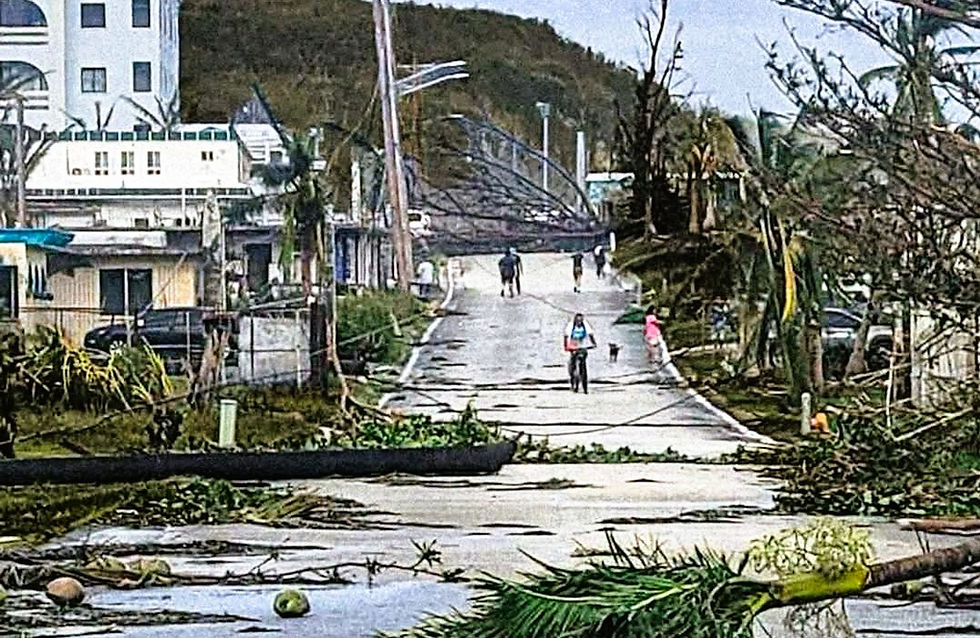
“The CNMI is still recovering,” he wrote. “It is still recovering from Super Typhoon Sinlaku. It is still recovering from economic collapse. It is still recovering from the pandemic.”
The governor asked Congress to support FEMA and SBA recovery efforts, help restore air service, strengthen EVS‑TAP rather than remove it, modernize the CNMI’s power system, provide labor flexibility and continue supplemental programs such as Medicaid, Disaster Unemployment Assistance and Disaster Nutrition Assistance.
Apatang said visitor arrivals are projected at just 104,511 this fiscal year, "more than 500,000 fewer visitors than the 607,000 arrivals recorded in fiscal year 2018."
Airline seat capacity has fallen by 78 percent, and the Marianas Visitors Authority’s Hotel Occupancy Tax revenue has dropped from $14.2 million to $1.4 million.

Warren Villagomez, MVA chairman, said the hearing highlighted the urgency of restoring access to visitor markets.
“We cannot rebuild tourism without air seats, and we cannot rebuild air seats without workable entry pathways,” Villagomez said, noting that the industry tries to recover with just a fraction of the airline seats and marketing resources that were available during its heyday.
“Any federal decision affecting visitor access must recognize how fragile our recovery is," he added.
Before the pandemic, visitors from China accounted for more than 40 percent of arrivals to the CNMI.
"Our position has always been that national security and economic recovery are not mutually exclusive. The program can and should continue to operate with strong screening, vetting, accountability and federal oversight," Villagomez said in a statement.

Ivan Quichocho, chairman of the Hotel Association of the Northern Mariana Islands board, said hotels are still struggling with low occupancy and rising operating costs.
“We respect national security concerns, but removing EVS‑TAP without a viable alternative would push many hotels and small businesses closer to closure," Quichocho said.
"We 100 percent believe security and economic opportunity can coexist. And the commonwealth must be afforded the economic tools necessary to have a
strong, self-sustaining economy," he added.
Tourism operators said the Senate exchange showed how decisions made in Washington could determine the pace of the CNMI’s recovery.
“The CNMI is not asking for special treatment. We are asking for fair treatment. We are asking that federal policy recognize who we are, where we are, and what responsibilities we carry for the United States,” Apatang wrote in his testimony.

Subscribe to
our digital
monthly issue