Can Guam's next generation afford to stay home? Gubernatorial candidates offer answers at university forum


By Ron Rocky Coloma
As many young adults question whether they can afford to build their futures on Guam, gubernatorial candidates spent Thursday outlining competing plans to address housing costs, education, workforce development and the rising cost of living
The July 30 event brought together four gubernatorial tickets to discuss affordable housing, career opportunities, school facilities and government accountability.
Candidates also reflected on the experiences that shaped their leadership and how they hope to prepare Guam for its next generation.
Although the candidates largely agreed that affordability and opportunity remain among Guam's biggest challenges, they offered different approaches to lowering living costs, improving schools, expanding housing and creating reasons for young residents to remain on the island.
Lt. Gov. Josh Tenorio opened the forum by recalling a youth summit held several years ago, where students identified teacher pay, mental health support and cultural education as their top priorities.
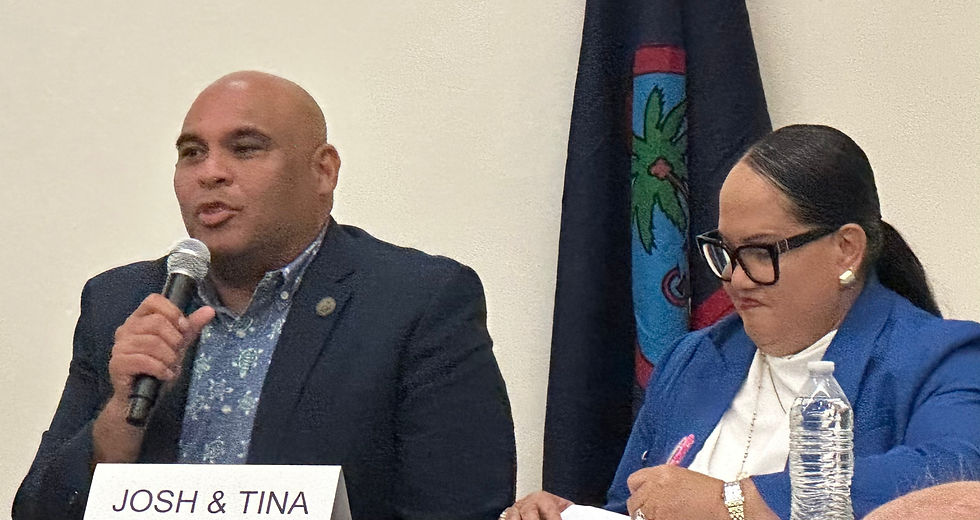
"Those things made me so confident in Guam's future because when you stand up and when you give direction and the leaders in the room listen, all good things can happen," Tenorio said.
Candidates first focused on affordability, with each team offering proposals aimed at easing financial pressures on younger residents and working families.
"One of the top things that causes the inflation to go up is the cost of power," Tenorio said, adding that expanding renewable energy projects could help lower utility bills.
He also described housing as "the big thing" in improving affordability for young families.
ADVERTISEMENT

Tenorio's running mate Tina Muna Barnes promised to create better-paying jobs by investing in industries Guam has already begun developing, including tourism, the green economy, cottage food businesses, cruise tourism and transshipment.
She also called for stronger partnerships between the University of Guam, Guam Community College, public schools and private employers to better connect students with careers.
Sen. Joe San Agustin and running mate Dwayne San Nicolas argued that increasing competition within Guam's economy would naturally reduce prices while creating better employment opportunities.
"If you have competition, you can drive prices down," San Nicolas said, adding that many workers currently hold multiple jobs simply to make ends meet. He said attracting more businesses and creating higher-paying jobs would help make Guam more affordable for younger residents.
Sen. Therese Terlaje highlighted previous legislative actions that provided tax credits to offset power costs, suspended fuel taxes and expanded investments in transportation and Medicaid.

Running mate Sen. Sabina Perez said improving transparency in government spending would help ensure taxpayers receive greater value from public services while strengthening programs that residents rely on.
Tenorio-Muna Barnes, Terlaje-Perez and San Agustin-San Nicolas are seeking the Democratic Party's nomination.
Sen. Tony Ada and running mate EJ Calvo said rebuilding Guam's economy, particularly through tourism, is key to addressing affordability.
Calvo noted that the island has lost nearly $1 billion in tourism-related economic activity compared with before the pandemic and argued that restoring visitor arrivals would generate more higher-paying jobs.

Ada encouraged greater food self-sufficiency through agriculture. "You can grow your own lettuce, your own cabbage, green onions, things of that nature so that you can provide for your family without being so reliant on the supermarkets," he said.
Ada and Calvo are running against Speaker Frank Blas Jr. with running mate Mary Okada for the Republican nomination. Blas and Okada were unable to attend due to a prior commitment.
Beyond the cost of living, candidates also addressed the condition of Guam's schools and how the education system can better prepare students for future careers.
San Agustin vowed to review the stalled Simon Sanchez High School project if elected and said his administration would establish clear timelines to move construction forward.
San Nicolas described deteriorating campuses as "an institutional failure" and proposed assigning maintenance teams to school districts instead of relying solely on centralized operations.
Perez proposed expanding magnet school programs beginning in middle school, increasing public-private partnerships and using solar energy projects to help reduce school operating costs.
Terlaje said publicly available project schedules would allow residents to monitor progress and hold elected officials accountable. "How you're going to hold us accountable is the schedule that we make as to what's going to get done: which school, when," she said.
Ada supported giving individual schools more authority over funding and maintenance through site-based management, while Calvo argued that management, rather than funding, remains the primary challenge facing the Department of Education because available grant money has gone unspent.

Tenorio proposed simplifying procurement rules so principals could make smaller repairs without lengthy approval processes.
"Why can't the principal just go and get the three quotes to repair the split air conditioning in one of the classrooms?" he asked.
Shifting to the topic of careers, candidates explained how they would encourage young Guamanians to stay on island rather than seek opportunities elsewhere.
Although each ticket proposed different solutions, several emphasized strengthening education-to-employment pathways, expanding vocational training and improving confidence in government hiring.
Calvo said creating economic opportunities must be paired with improving residents' quality of life.
"I believe that Guam's future belongs to your generation, and our job is to create the conditions for you to thrive," Calvo said.
Tenorio highlighted career technical education and the University of Guam's National Science Foundation-funded "Navigating Home" program, which helps recruit local professionals back to the island with guaranteed employment.
ADVERTISEMENT

Barnes pointed to legislation supporting vocational charter schools, internships and scholarship programs that encourage students to return after completing their education.
San Agustin said Guam must better align educational institutions with industry needs, while San Nicolas pledged to recruit more young professionals into government service.
"We're going to start hiring all you young guys because you guys want to make a better future for us all," San Nicolas said.
Perez said restoring trust in government hiring and expanding apprenticeship opportunities beginning in middle school would help retain local talent. Terlaje said competitive salaries and fair hiring practices are also necessary to reverse the island's workforce losses.
Housing was a recurring issue throughout the forum as candidates outlined proposals aimed at helping younger residents rent or purchase homes.
Barnes highlighted legislation she sponsored establishing Guam's first-time homebuyer assistance program and expanding low-income housing tax credits.
Tenorio said increasing accessory dwelling units and allowing more multigenerational housing could quickly expand the island's housing inventory.
San Agustin proposed creating a housing resource center that would bring together government agencies, lenders and housing organizations to help first-time buyers navigate financing and the homebuying process.
San Nicolas suggested revising permitting requirements to encourage construction of smaller, less expensive homes.
"We need to retool the permitting process so that we're able to build maybe smaller, more cuter homes," San Nicolas said.
Terlaje discussed financing assistance, infrastructure investments and permitting reforms designed to reduce housing costs, while Perez proposed redeveloping underused buildings and encouraging housing cooperatives to expand affordable housing options.
Calvo proposed increasing housing inventory through faster permitting and workforce development to stabilize home prices and rents.

Subscribe to
our digital
monthly issue