When home was no longer home: Why people left these Pacific islands


Scattered across the Pacific Ocean are beautiful islands that were once home to thriving communities. In these islands, archaeologists have discovered the remains of stone houses, ancient tools, ceremonial sites and abandoned settlements.
These artifacts reveal once-thriving communities where families lived, children were raised and leaders ruled thousands of years ago. However, at some point, the people departed.
What happened? Why would settlers abandon islands they had called home for generations? Let’s take a quick trip to some of the Pacific’s vanished communities.
Henderson Island: When the lifeline disappeared
About 120 miles northeast of Pitcairn Island lies Henderson Island, uninhabited and one of the world's most remote islands. Recognized as a UNESCO World Heritage Site, Henderson retains its stunning beaches and towering limestone cliffs. It is home to seabirds and unique plant species.
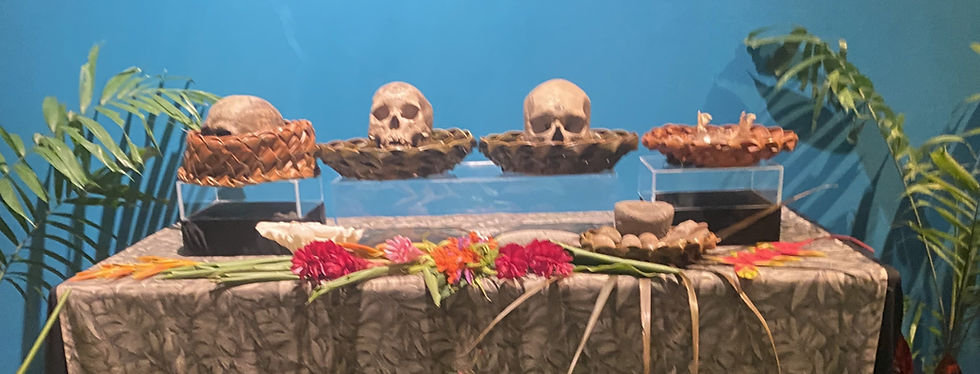
Henderson was home to a small Polynesian community centuries ago. Then they disappeared, leaving behind traces of their existence, including houses, stone tools, cooking wares and other remnants of daily life.
Dr. Marshall I. Weisler, an Australian archaeology professor, offered theories about why people left Henderson.
In his article “Henderson Island Prehistory: Colonization and Extinction on a Remote Polynesian Island,” Weisler said that Henderson Island once shared trade and travel networks with nearby Pitcairn Island and Mangareva. Canoes transported people, resources and information between the islands.
But Mangareva later experienced severe environmental problems, including large-scale deforestation. As resources became scarce, so did long-distance voyages. Without those important connections, Henderson became increasingly isolated.
If this theory is correct, the residents may have abandoned Henderson not because of problems on the island itself, but because the other islands miles away were struggling.

Pitcairn Island: The forgotten Polynesians
Pitcairn Island is known for the mutiny of the HMS Bounty. In 1789, crew members led by Fletcher Christian rebelled against Captain William Bligh and eventually settled on Pitcairn Island.
But long before the mutineers arrived, Pitcairn already had native inhabitants. Archaeologists have discovered evidence of villages, farming, stone tools and trade networks dating back centuries. Then the settlers vanished. Some experts believe early settlers abandoned the island due to the collapse of the regional trade routes.
In 1852, Pitcairn’s population grew to 200 and the island's resources could no longer support their needs. The British government relocated the settlers to Norfolk Island. Some of them returned to Pitcairn. As of 2023, Pitcairn Island had an estimated population of between 35 and 50.
ADVERTISEMENT

The Phoenix Islands: Why people kept coming back
Another fascinating story lies among the Phoenix Islands of Kiribati.
Evidence suggests that people settled on some of these islands, abandoned them and then resettled several times throughout history.
There was no mystery about why people left or why they kept coming back.
In the 1930s, Britain and the United States used the islands as a refueling stopover for their planes. Some of the islands were also used for military activity during World War II.
The British government moved some families to the islands, hoping to create farming communities. However, the Phoenix Islands presented challenges for the residents, such as scarcity of fresh water, difficulty growing food and surviving droughts that could last for years. People often relied on supplies arriving by ship.
As airplanes became capable of flying longer distances, the islands were no longer needed as refueling stations. Jobs and supplies disappeared. Eventually, it became too difficult for people to stay.
Today, most of the Phoenix Islands are uninhabited, except for a village on Kanton Island, which has fewer than 50 residents.
Nan Madol: The Pacific's lost city
Nan Madol in Pohnpei is one of the most remarkable archaeological sites in the Pacific region. Often called the "Venice of the Pacific," Nan Madol consists of nearly one hundred artificial islets connected by canals.
For centuries, Nan Madol served as the political and religious center of the powerful Saudeleur Dynasty until a change in leadership in 1628.
The city lost its political importance, people moved away and by the 18th century, it was largely abandoned.
Raquel Bagnol is a longtime journalist. She worked as a reporter for Marianas Variety on Saipan and Island Times in Palau. Send feedback to gukdako@yahoo.com

Subscribe to
our digital
monthly issue