


Tonga to merge science and traditional knowledge in weather forecasting

By Pacific Island Times News Staff
The skies are clear at sunset. It's a cue to prepare for a cooler evening.
Long before satellites monitored cloud bands across the Earth’s surface and weather equipment forecast a potential storm, Tongans were able to understand the sky's events.
"Sharing these indicators alongside our weather information helps the public better understand what they are observing in their own environment and, importantly, how they can prepare for the conditions ahead," said Siosinamele Lui, traditional knowledge adviser for Climate and Oceans Support Program in the Pacific Phase 3.
Tonga is seeking to revive its ancient weather-forecasting practices by incorporating traditional environmental indicators into weather and climate forecasting and warning systems, and by including them in daily television weather updates.
"By integrating traditional knowledge with climate science, we can develop public weather and climate services that are more meaningful, trusted and accessible to our communities, ultimately helping to build a safer and more resilient Tonga," said Laitia Fifita, director of the Tonga Meteorological Service.
The Climate and Oceans Support Program in the Pacific Phase 3, or COSPPac3, workshop, recently organized by the Secretariat of the Pacific Regional Environment Program, focused on enhancing Tonga's pioneering traditional knowledge database "as a unique and innovative resource" for the Tonga Meteorological Service.
The week-long training workshop, held at the TMS headquarters in Fua’amotu, sought to document traditional knowledge, develop database management and communication systems and strengthen the weather service's capacity to record and manage traditional knowledge relevant to weather, climate and natural hazards.
"This work also supports the preservation and integration of generations of Tongan weather and climate knowledge, ensuring traditional knowledge continues to inform climate resilience and decision-making," SPREP said.
"Documenting traditional knowledge is not simply about preserving our past, but also about using generations of lived experience to help protect our future,"
Fifita said.
"By integrating traditional knowledge with climate science, we can develop public weather and climate services that are more meaningful, trusted and accessible to our communities, ultimately helping to build a safer and more resilient Tonga," she added.
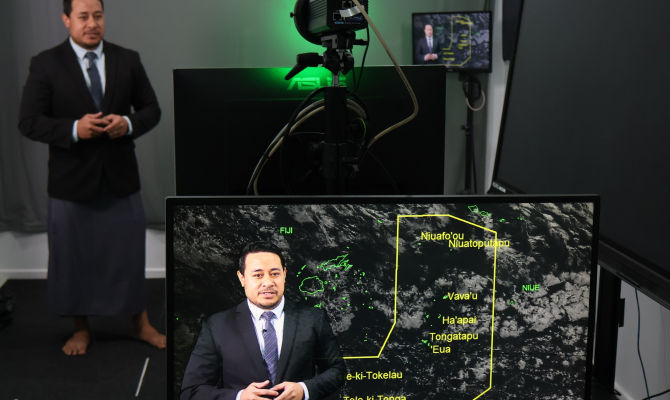
Lineni Latu and Vaiola Vainikolo, weather forecasters, said that by incorporating traditional knowledge indicators into their television weather bulletins, they are connecting science with the knowledge and observations that Tongan communities have used for years.
ADVERTISEMENT

Lui said community-led documentation, protection and application of traditional knowledge has enormous potential to strengthen resilience across the Pacific.
"This approach places traditional and indigenous knowledge holders at the center as leaders and knowledge authorities, ensuring that data collection processes uphold cultural protocols, data sovereignty and intergenerational knowledge transfer," Lui said.
At the conclusion of the workshop, SPREP said Tonga's weather agency had significantly increased the number of traditional knowledge records in its database.
The workshop was organized as part of the COSPPac3 and Republic of Korea-Pacific Islands Climate Prediction Services projects’ support to Pacific National Meteorological and Hydrological Services to strengthen climate services and preparedness for climate variability and extreme events.

Subscribe to
our digital
monthly issue


