The challenge of rebranding: There's more to Guam than what snakemongers suggest

Updated: Jun 10

By Mar-Vic Cagurangan
Before coming to Guam with her husband four years ago, Dot Miller did some research to understand what the island is all about. She heard and read about the oft-repeated stories that had, over the years, spiraled into mythical proportions.
“People said there were no birds and there were so many snakes on Guam,” Miller said. “I don't know how long ago that was, but people still say that today about Guam. I think we need to change this story.”
While the "birdless and snakeful island” account may be a bit exaggerated, the story is not without basis. For decades, Guam has struggled to contain the brown tree snake population, which slithered into the island via military cargo in the early 1950s and has caused the extinction of 10 of Guam’s 13 native forest birds.
Despite the snake scare, Miller and her husband, Ranger, came to Guam anyway. They intended to stay only for six months. But they fell in love with the island and made it their new home, discovering that Guam has more interesting angles than the snake tales.
“The island spirit and authenticity kept us here forever,” said Miller, who was among the panelists at the Guam Visitors Bureau’s forum that tackled the future of Guam tourism held May 26 at Dusit Thani Guam.
The couple from Colorado now operates Biba, a concept bar in Tumon that caters to locals and tourists.
Miller underscored the need for industry stakeholders to leverage technology to manage the Guam narrative and tell the stories that matter.

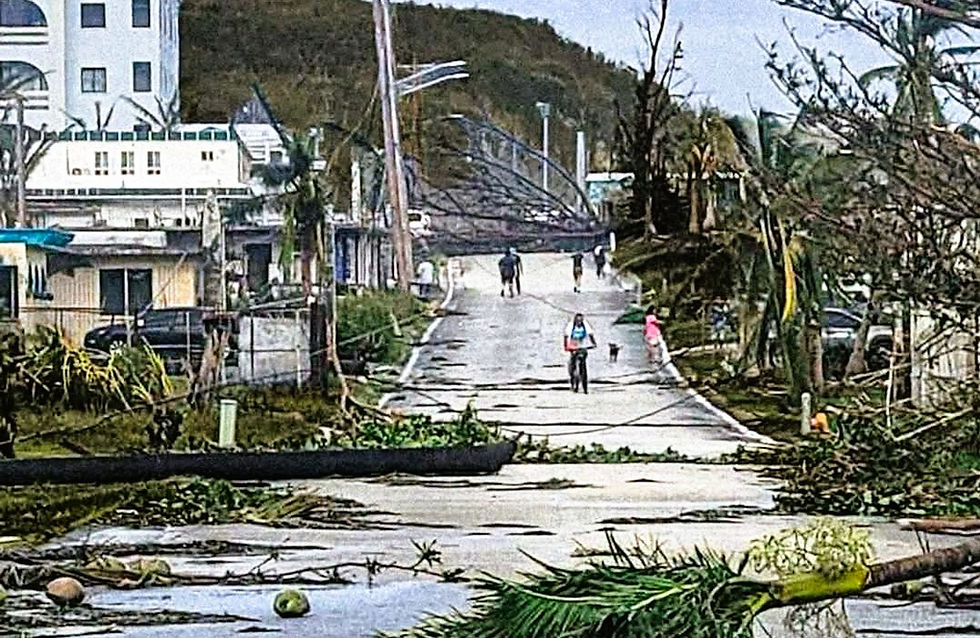
Rebranding is particularly imperative for Guam amid multiple challenges facing the island’s main economic driver. These include rising global jet fuel prices, regional economic uncertainty and the lingering impacts of Super Typhoon Sinlaku on recovery and traveler confidence.
“We said early on that this period would likely be difficult. And candidly, the March and April numbers reflect that reality,” said Regine Biscoe-Lee, GVB president.
GVB’s latest statistics showed a 28 percent decline in arrivals, from 51,115 in April 2025 to 36,818 in April this year.
“The important thing is that we understood the conditions early, responded quickly and stayed focused on protecting Guam’s long-term recovery instead of reacting out of panic,” Biscoe-Lee said. “Because in moments like this, standing still is not a strategy.”
Waiting for conditions to improve on their own is not an option. “We have to actively use every tool available to us—marketing support, airlift incentives, destination improvements, business assistance programs and coordinated public-private action—to help Guam ride out difficult periods and position ourselves for recovery ahead of our competitors,” the GVB head said.
The industry doldrums are not unique to Guam. Global tourism has been unstable since the pandemic era halted world travel.
Guam has seen the impact of the evolving travelers’ preferences. Splurging is no longer a priority. The stagnant market had prompted the shutdown of DFS Galleria and the departure of luxury brands. Once the shopping mecca of the Pacific, Guam has lost that commercial appeal and must now offer more than just sun and sand to compete with other destinations.
According to industry experts, travelers are increasingly seeking authentic, flexible and meaningful experiences rather than curated experiences, theme parks or flashy new attractions.
“We can do this. We don't have to try to compete with larger destinations. We have that authenticity here,” Miller said. “A traveler wants to belong to a place while they're there. They don't just want to come in, take pictures and leave. They want to feel like they belong.”
ADVERTISEMENT

Nathan Denight, former GVB president, suggested reviving the Hafa Adai Pledge program, which tapped businesses and the local community as ambassadors for Guam.
“Hafa Adai is more than just a greeting,” said Denight, now the marketing director for GTA. “It represents the warmth of our people, the friendliness, family and just how it makes people feel good. It starts there. It seems like a small thing, but it was really effective.”
The University of Guam’s Center for Island Sustainability has partnered with GVB to create a sustainable destination that encourages visitor participation.
Inviting them to tree-planting activities, for example, can give visitors a sense of having a stake in the community.
“People shouldn't have the mindset that they're coming to Guam to take something. That's not what we can be anymore as an authentic destination,” said Austin Shelton, CIS director.

He said the balance comes where the environment is considered an economic infrastructure.
"So, infrastructure can't just be a hotel and a restaurant,” he said. “People are really coming here for something more special than that.”
While Guam still struggles to control the population of the infamous brown tree snakes responsible for scaring away some bird species—and the resulting story about the island—Shelton said the territory has something worth preserving and worth telling.
“Visitors are coming here perhaps to see the most diverse coral reefs in the United States, to see the jungles that have thousands of species of beautiful flowers and different plants with medicinal purposes and so much more,” he said.

Subscribe to
our digital
monthly issue