


US flags China's 'systemic geocriminality' in Pacific island region

Fiji asks Washington to prove corruption claims against sanctioned Chinese-born businessman in Suva

By Mar-Vic Cagurangan
The U.S. government has warned against China-linked criminal operators infiltrating local governments, bribing officials across the Pacific and giving rise to what security experts described as "systemic geocriminality."
The U.S Embassy in Fiji issued the warning on a Facebook post, following the U.S. Department of State's move to sanction Zhao Fugang, director of the Overseas Chinese Service Center in Fiji, for his alleged involvement in "significant corruption on behalf of China-based actors."
Zhao and his immediate family members are banned from entering the U.S.
The State Department alleged that Zhao, a political operative in Suva, "abused his public position by paying bribes to Fijian citizens to advance China-based government, business and criminal interests," leaving Fiji vulnerable to "malign foreign influence."
Zhao is a Chinese-born businessman and naturalized Fijian citizen, who runs property development and tourism-related businesses in Suva. He owns Yue Lai Hotel.
While vowing cooperation with the United States in combating transnational crimes, the Fiji government asked U.S. authorities to provide evidence supporting the State Department's allegations against Zhao.
"While respecting the United States’ sovereign right to make decisions under its own laws and policies, the government emphasizes that any allegations of unlawful conduct within Fiji must be addressed through the appropriate Fijian legal and law enforcement processes," the Fiji government said in a statement posted on Facebook.
Fiji urged the U.S. government "to share credible information or evidence of alleged offences committed in Fiji with their Fijian counterparts for assessment and investigation where warranted."
In an earlier report, the Organized Crime and Corruption Reporting wrote that Zhao was listed in the Australian Criminal Intelligence Commission’s registry of Priority Organization Targets in 2023 under suspicion that he was running an international crime syndicate believed authorized by the Chinese government.
"The United States will hold accountable those who abuse power for personal gain, and continue to fight corruption that fuels drug trafficking, enables transnational criminal organizations and threatens U.S. interests around the world," Thomas Pigott, spokesman for the State Department, said in a press statement.
"Corruption stunts opportunities for foreign investment and foreign assistance, facilitates organized crime, offers a permissive environment for malign actors, drives illegal migration, and undermines citizens’ faith in government," he added.
Pigott said organized crimes directly impact U.S. national security, economic and foreign policy interests, and those of our partner nations and is why the Department is taking these actions.
ADVERTISEMENT

In a statement to The Fiji Village, Zhao denied the State Department's allegations, dismissing them as "unsubstantiated."
“Before the statement was published, no one from the United States Embassy or the Department of State contacted me. I was not told of any allegation and was given no opportunity to respond," he said in a statement.
Zhao also said he had not been questioned by any Fijian authority over the allegations and that no charge had been laid against him in Fiji.
In a Facebook comment, the U.S. Embassy in Fiji said infiltration by Chinese crime rings is becoming commonplace across the Pacific.
In Palau, Hunter Tian, head of the CCP-linked Palau Overseas Chinese Federation, was placed on the Pacific nation's “undesirable aliens” list in 2022 for his role in illegal online gambling.
In 2020, the U.S. Department of the Treasury sanctioned “Broken Tooth” Wan Kuok Koi, head of the 14K Triad for illicit activities, including bribery, corruption and graft, in Southeast Asia and Palau.
In 2023, Cary Yan and Gina Zhou pleaded guilty in the U.S. for a scheme to create a “country within a country” in the form of a semi-autonomous region in the Marshall Islands, reportedly on China's behalf.
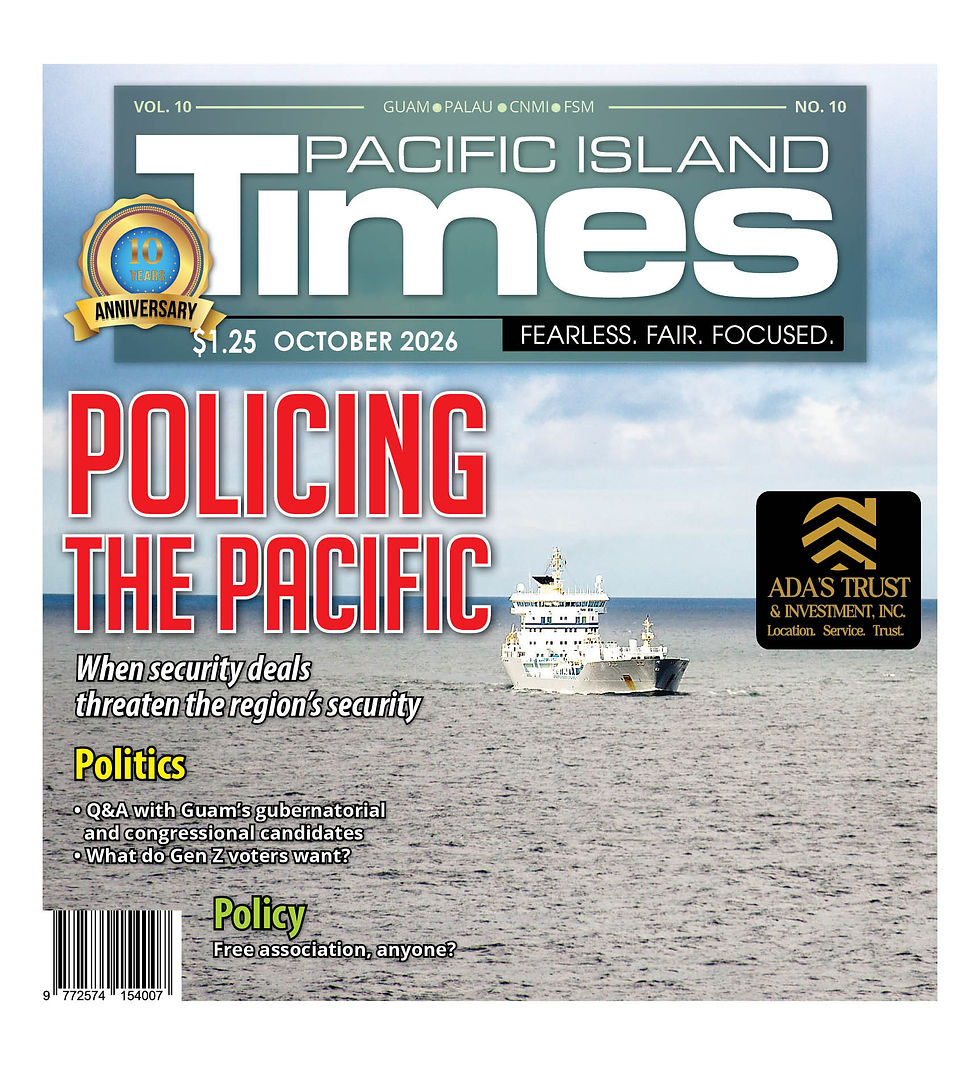
Subscribe to
our digital
monthly issue


