


Exploring fine dining

Updated: Aug 3


Bridgman, MI--I was fortunate to grow up in Holly, Michigan, with wonderful parents who did their best to raise me in a Christian home with love, discipline, guidance and a healthy diet.
We always had three good meals a day. My parents believed strongly in and practiced a lacto-vegetarian diet that included eggs and dairy products, but excluded meat, fish and poultry.
My father loved fresh fruit and we always had plenty of Michigan cherries, blueberries, melon, peaches, pears and apples. My mother always served fresh vegetables whenever possible; tomatoes and sweet summer corn were favorites of mine.
There is one vegetable I’ve never been able to stand: lima beans. When my mother served them, telling her “I don’t like those” rarely went over well, so I learned a different trick—tucking them into the jowls of my cheeks and flushing them down the toilet later.
Sugar was minimized and we did not eat desserts on a regular basis. However, my mother always had great pumpkin and pecan pies around the holidays.
My parents knew the owners of The Miller Road Dairy in Flint, and we would go there once or twice a year for ice cream treats. I would always order a chocolate malt. I thoroughly enjoyed the experience of refilling my glass twice with the metal container used to blend the ice cream specialty. However, desserts were a rarity for us.
An early mentor in my healthcare career was Bob Willett, CEO of Kettering Medical Center in the Dayton, Ohio area. In one of my meetings with him, he said, "Ted, you're going to be a hospital CEO someday, and you will need to know how to interact with important physicians in fine dining social settings. You need to develop discerning culinary tastes, so I'm sending you to the Greenbrier Resort in West Virginia for a week, where fine dining is an integral part of this grand resort experience."
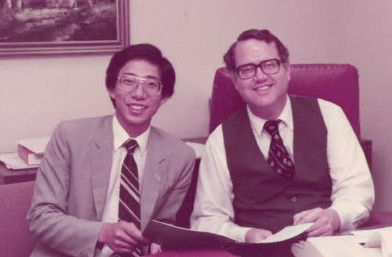
Bob was a wise man. He knew that I had not developed much of a taste for fine food or an appreciation for fine dining experiences. I learned a lot from this trip to Greenbrier, where exceptional food and dining are integral to the resort's culture. Thus, my education in discerning tastes and the phenomenal world of desserts was initiated.
The Greenbrier is a high-end, world-class resort. As the dining experience is integral to the product of this luxury establishment, dinner in the main dining room was included in the room rate. I learned that guests were required to dress up for dinner. There were protocols and rules to follow in a formal dining room for the evening meal, the highlight of the day.
This was a great cultural exposure for me as I was quite ignorant about fine dining and the wide differences in how various foods taste and are prepared, especially desserts.
As an example, I've always enjoyed peaches. I learned at the Greenbrier, however, that there are peaches, and then there are Greenbrier peaches. These peaches are extremely memorable. They are among the most popular desserts on the Greenbrier menu.
The Greenbrier uses only the highest quality peaches. Before freezing, they are packed with peach puree to retain their flavor. When served partially unfrozen with fresh whipped cream, they make a most fabulous dessert.
Each evening, the menu would completely change as the chefs demonstrated their skill and creativity with a wide variety of entrees and desserts. In one week’s time, my appreciation for fine foods, specifically desserts, grew exponentially.
A few short years after this experience at The Greenbrier, I had the opportunity to join the Adventist Healthcare hospitals in the Washington, D.C. area. As a healthcare executive, my stock had risen, so had my reputation for my interest in exceptional foods and desserts.
After rising to vice president at Adventist Healthcare Mid-Atlantic System, I was invited to a retreat and seminar for executives. Dates and details were announced along with the location: The Greenbrier Resort in White Sulfur Springs, West Virginia.
I was excited to visit this wonderful resort again and experience the exceptional dining options I knew would be available, especially their extensive dessert selection.
Our first dinner in the formal dining room seated me at a table with George Smotherman, who was the chief financial officer at Washington Adventist Hospital. George is unique and an overall great guy. He had a brilliant mind and could be eccentric. It was always fun to engage with him in conversation, and we both enjoyed bantering back and forth when we held different views on various topics.
After the first three courses of dinner, I ordered three desserts from the extensive dessert menu that evening. George immediately began needling me about ordering so many desserts. As the discussion escalated, George humorously suggested that I order and consume all the desserts on the menu, of which there were eleven that evening. I replied that I didn't desire to order them all right then, as I had already eaten a large meal. However, I let him know that if I wanted to, I could eat them all in one sitting.
ADVERTISEMENT

George and I then began a childlike back and forth of "I could", "No, you couldn't", "Yes, I could", “No, you couldn't." This led me to suggest that George put his money where his mouth was. He offered $25. I replied that I wouldn't do it for less than $100. George then went from table to table, successfully soliciting additional investors in his "can't lose" bet.
We shook hands on the terms that the next evening, whatever desserts were on the Greenbrier menu, I would attempt to consume them all. If I were successful, George (and his co-conspirators) would pay me $100. If I couldn't do it, then I would turn over $100 to them.
And so, the die was cast for the next evening’s most anticipated dessert menu in Greenbrier history.
Theodore Lewis is the former CEO of Guam Memorial Hospital and has a healthcare consulting business in Bridgman, MI. He is collecting stories about lessons learned in life and can be reached at theodorelewis@yahoo.com.

Subscribe to
our digital
monthly issue

